
The programme at a glance
- Who it is for
- Students in Class 9 and Class 10 who want to prepare for the NDA early
- Format
- Residential, on the Mussoorie campus: schooling together with NDA-oriented preparation
- Batch size
- About 40 students per batch, according to class
- Session
- 2027–2028 admissions open, subject to seat availability
- Admission
- Entrance test: a written test and an interview

Why start in Class 9
Starting early gives a student more time to strengthen academic fundamentals, communication, discipline and overall personality before the NDA exam and the SSB.
Strong fundamentals
More time for mathematics and English, the base of the NDA written exam.
Fitness as a habit
Daily physical training builds stamina and a healthy routine.
Confidence
Group activities and communication practice from an early age.
Discipline
A structured residential day teaches time management and responsibility.
What preparation covers
- Mathematics
- English
- General Ability
- Current affairs
- Communication
- Personality development
- SSB orientation
- Physical fitness
How schooling and NDA preparation fit together
Students pursue their schooling along with NDA-oriented preparation, subject to the applicable school and course structure. In Classes 9 to 12 the schedule gives more weight to academics, so that board studies do not suffer. Schedules are personalised, including extra support for students who need it.
A student who finds mathematics difficult can still prepare: with regular practice and proper guidance, fundamentals and confidence improve step by step.
The daily routine
This is the residential Pre-Foundation timetable.
| Time | Activity |
|---|---|
| 5:00 AM | Wake up |
| 5:30–6:30 AM | Physical training |
| 6:30–7:30 AM | Breakfast |
| 8:30–9:00 AM | Assembly |
| 9:00 AM–1:00 PM | Schooling |
| 1:00–2:00 PM | Lunch |
| 2:00–3:00 PM | Rest |
| 3:00–4:00 PM | Sports |
| 4:00–6:30 PM | Defence curriculum |
| 7:00–8:00 PM | Dinner |
| 8:00–11:00 PM | Self-study |
| 11:00 PM | Lights out |
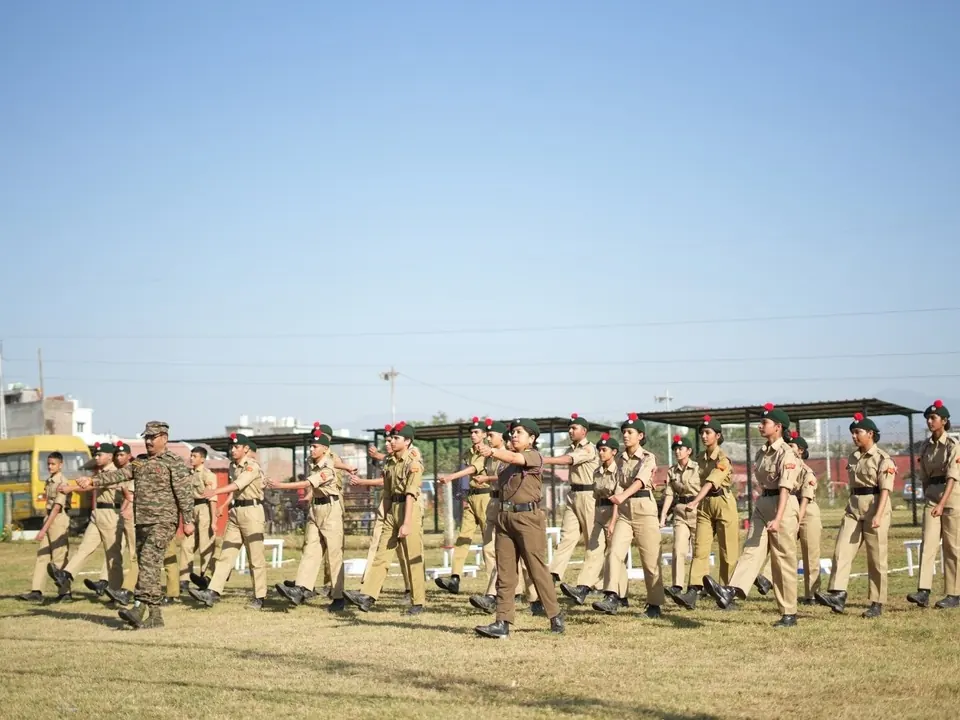
Student support
Students live in separate hostels for boys and girls with 24×7 CCTV. Wardens are retired Army personnel who stay with the students, and parents can reach the warden for any concern. An in-house nurse handles primary care, with a local hospital tie-up and DMA vehicles for emergencies.
Parents receive a Student Progress Report every month covering academics, physical fitness, attendance and overall progress. Read more about campus life.
Admission and fees
Share the student’s name, current class and age with the admission team. The student then takes the entrance test, a written test and an interview. Fees depend on the class and hostel requirement, and a counsellor shares the current fees. How to apply · About fees
Questions parents ask
Is Class 9 too early to start NDA preparation?
No. Starting in Class 9 gives more time to build academic fundamentals, communication, discipline and fitness. Class 11 is also a good time to begin systematic preparation.
Will NDA preparation affect board studies?
The schedule is designed to handle both, with more focus on academics from Class 9 to 12, and personalised support for students who need extra help.
My child is weak in mathematics. Can they still prepare?
Yes. With regular practice and proper guidance, fundamentals and confidence improve gradually.
How do we stay in touch with our child?
Family calls take place in the evening, about 10–15 minutes before dinner. Parents also receive a monthly progress report and can contact the warden for any issue.
Next steps: NDA Foundation Course (Classes 11–12) · Campus life